
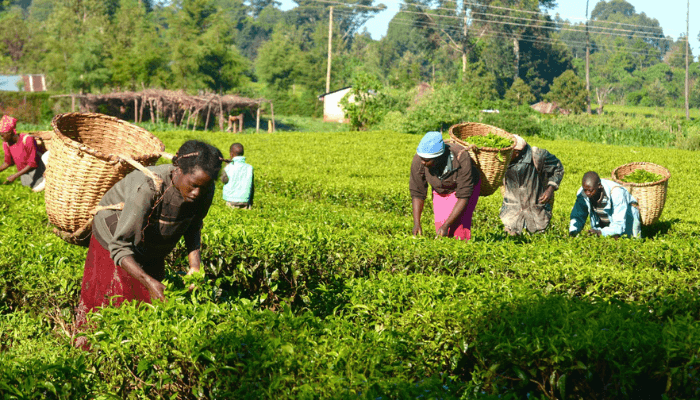
Farmer cooperatives represent essential institutional infrastructure enabling smallholder farmers to access high-value export markets and secure competitive trade financing previously reserved for large-scale commercial operations. Cooperatives aggregate individual farmer production into economical export volumes, facilitate compliance with international quality and safety standards, provide export-related trade finance, and maintain buyer relationships demanding professional operations that individual farmers cannot manage independently.
The economic impact is substantial: U.S. cooperatives exported $5.6 billion in agricultural products (representing 12.3% of total U.S. agricultural exports), with Vietnam’s cooperatives exporting 26,000+ metric tons to 20+ countries generating hundreds of billions in annual revenue. More broadly, the world’s top 300 cooperatives generated $2.1 trillion in annual revenues (2019), employing 279 million workers globally—equivalent to the world’s tenth-largest economy.
For farmers in developing regions, cooperatives represent the primary institutional mechanism bridging the gap between subsistence farming and commercial export agriculture. By providing aggregation (consolidating scattered individual production), quality assurance (ensuring export-standard compliance), value addition (processing and branding), certification services (managing complex international standards), and trade finance (securing working capital for export operations), cooperatives transform farmer production from commodity subject to spot market price discovery into branded products commanding premium pricing in international markets.
This report synthesizes international best practices, global case studies, and financing mechanisms demonstrating how strategic cooperative engagement with export markets delivers transformational income improvements for member farmers—typically 20-40% member income improvements through better marketing margins, plus 3-4X price premiums achievable through certified organic, fair trade, or branded specialty products.
1. The Cooperative Role in Agricultural Export Development
Cooperatives occupy a distinctive position in agricultural export systems—not as profit-maximizing exporters, but as member-owned institutions charged with expanding member market access while maintaining member control and benefit-sharing. This distinction shapes cooperative export strategy fundamentally different from commercial exporters.
Why Cooperatives Matter for Farmer Export Access
Individual smallholder farmers face insurmountable barriers to export market entry. A farmer operating 1-2 hectares produces insufficient commodity volume for economical export shipment (minimum container loads of 20-40 metric tons), lacks certifications required by international buyers, cannot navigate complex export documentation (health certificates, phytosanitary permits, customs procedures), cannot finance pre-export working capital for inputs and processing, and lacks established buyer relationships or market intelligence.
Cooperatives overcome these barriers through aggregation, professionalization, and relationship building:
Aggregation Scale: A cooperative of 500 farmers aggregates production into 500+ metric ton volumes enabling economical international shipment. This scale achieves freight rates, certifications, and buyer relationship benefits individual farmers cannot access independently.
Quality Standardization: Cooperatives impose consistent production standards across membership—VietGAP or GlobalGAP certification requirements, pesticide protocols, harvesting timing—ensuring product uniformity and compliance with buyer specifications. This reduces buyer risk that individual farmer production may fail quality expectations.
Buyer Relationships: Cooperatives establish stable, long-term relationships with international buyers, providing consistency (same volume, quality, timing across seasons) that enables buyer supply chain planning. Individual farmers cannot offer such consistency.
Market Intelligence: Cooperatives invest in market information systems, participate in international trade shows, and conduct buyer research informing production planning. Individual farmers lack resources for these activities.
Professional Management: Cooperatives employ dedicated professionals for export operations—quality managers, export coordinators, finance specialists—enabling professional coordination buyers expect. Individual farmers cannot justify specialized staff investment.
2. Cooperative Export Functions and Value Chain Positioning
Successful cooperatives provide integrated services across the entire export value chain, moving far beyond simple commodity aggregation to value-creating activities that increase farmer income and ensure buyer satisfaction.
Input Supply and Production Coordination
The value chain begins upstream with input provision and production guidance. Leading cooperatives source bulk quantities of certified seeds, fertilizers, and agricultural inputs at 40-50% discounts compared to individual retail purchase prices, passing savings to member farmers.
More importantly, cooperatives provide technical extension guidance ensuring production meets export-standard requirements. Vietnamese cooperatives train members on VietGAP and GlobalGAP standards—protocols for pesticide application, water quality testing, worker welfare documentation, waste management—before production season begins. This guidance prevents costly production mistakes (failure to follow required protocols) that would render harvest unmarketable.
Production planning coordination ensures supply consistency to buyers. Rather than each farmer making independent planting decisions, cooperatives coordinate timing, variety selection, and volume targets matching buyer demand forecasts. This eliminates boom-bust cycles of oversupply collapse or shortage price spikes, instead providing stable buyer-requested volumes.
Post-Harvest Management and Quality Control
Post-harvest management represents critical value protection. Studies show 30-40% of production losses occur post-harvest through inadequate handling, improper storage, premature ripening, or pest damage. Cooperatives operating cold storage facilities, applying proper temperature control, and implementing quality-grading systems reduce these losses to 10-20%—protecting farmer income and enabling distant market access requiring extended shelf life.
Quality grading and sorting ensures only truly export-grade product reaches buyers. Cooperatives separate product by grade (premium, standard, processing) enabling appropriate buyer matching—premium berries to premium buyers, standard product to institutional buyers, processing-quality product to processors. This precision marketing increases aggregate returns.
Traceability documentation begins at post-harvest stages. Cooperatives record product source farm, harvest date, handler information, and storage timeline, creating audit trail required for food safety certifications and enabling rapid recall if contamination occurs.
Processing and Value Addition
High-income cooperatives move beyond primary product sales into processing and branded product development. Me Village Agricultural Cooperative in Vietnam produces organic tea, processes it into premium tea bags and instant tea products, and exports to European specialty retailers. This value-addition achieves 3-4X pricing compared to raw tea leaf commodity sales.
Processing differentiates cooperative product offerings—raw mango commodity vs. dried mango snack, fresh vegetable vs. pickled specialty product, raw coffee bean vs. roasted branded coffee. Processed products command 50-100% price premiums while improving storage stability and enabling year-round supply.
Certification Management and Quality Assurance
Cooperatives manage complex certification processes beyond individual farmer capability. GlobalG.A.P., organic, Fairtrade, ISO 22000, and HACCP certifications each require 3-6 months implementation timelines, $2,000-$8,000 certification costs, annual audit compliance, and comprehensive record-keeping systems.
Cooperatives establish “Group Certification” structures where the cooperative itself becomes certified as the legal entity maintaining an Internal Control System (ICS) over member farms. This structure reduces per-farm costs 40-60% vs. individual certification while enabling scaling across 50-500 member farms.
Cooperative responsibility for certification maintenance includes annual audits, documentation reviews, and corrective action implementation—activities that would overwhelm individual farmers managing solo operations.
Export Documentation and Buyer Coordination
Cooperatives handle export documentation complexity: health certificates, phytosanitary permits, customs documentation, invoice/packing list generation, and regulatory requirement verification for destination countries. This professionalization prevents costly documentation errors causing shipment rejection or clearing delays.
Buyer relationship management represents ongoing cooperative responsibility. Cooperatives maintain communication with established buyers, negotiate pricing and terms, resolve shipment issues, provide market feedback enabling product improvement, and pursue new buyer development.
3. Export Financing and Trade Finance Mechanisms
Export markets require substantial working capital investment—input purchasing, processing, packaging, storage, transportation—prior to shipment and buyer payment. Smallholder farmers lack individual access to export financing, making cooperative trade finance provision essential.
Trade Finance Structure
Agricultural export typically follows 60-90 day payment timelines: inputs purchased 30-60 days pre-harvest, harvested product held in storage 2-4 weeks, shipped internationally requiring 2-4 weeks transit, clearing customs 1-2 weeks, and finally reaching buyer requiring buyer inspection/testing before payment authorization.
The farmer/cooperative must finance the entire 90-120 day timeline from personal cash flow—rarely possible for smallholders—or access structured export financing covering these periods.
Pre-Export Financing Mechanisms
CoBank (U.S. Farm Credit System member with unique export finance authority) offers comprehensive export financing models applicable to cooperatives globally:
Pre-Export/Pre-Shipment Financing: Short-term credit (typically 90-180 days) covering working capital from production through shipment. Cooperatives present sales contracts or irrevocable letters of credit as collateral, with bank advancing funds for input purchasing, processing, and shipping logistics. Interest rates typically reflect cooperative creditworthiness plus spread (for example, LIBOR + 2-4% for cooperative-owned exporters).
Documentary Letters of Credit: International standard trade instrument where buyer’s bank commits to pay exporter upon presentation of conforming shipping documents (bill of lading, insurance certificate, invoice). This mechanism eliminates buyer credit risk (importer cannot withhold payment once documents presented) and exporter credit risk (bank guarantees payment if documents conform).
Documentary L/Cs reduce cooperative financing costs because bank funds advances at letter of credit rates (lower than pure trade credit rates) since payment is essentially guaranteed by buyer’s bank.
Factoring: Cooperative sells export receivables to specialized finance provider at discount, obtaining immediate working capital. The factor assumes collection risk, enabling cooperative cash flow relief when buyers request extended payment terms (30-90 day terms are common for international buyers). Cooperative bears cost through receivables discount (typically 2-8% depending on buyer creditworthiness).
Government/Institutional Guarantees
Many developing country governments provide export guarantee programs reducing lender risk. Ethiopia’s Coopbank offers pre-shipment credit backed by Development Bank of Ethiopia (DBE) guarantees, reducing lending rates and documentation requirements.
The USA’s USDA Export Credit Guarantee Program and Export-Import Bank provide guarantees enabling agricultural lenders to finance export without full cooperative balance sheet strength. These guarantees are particularly valuable for smaller cooperatives with limited financial history.
Cooperative Credit Unions and Internal Financing
Some cooperatives establish parallel credit unions providing internal financing to member farmers and the cooperative for export operations. This model enables pre-export credit to farmers at below-market rates while directing interest income back to cooperative/members rather than external lenders.
4. Export Certification Systems and Compliance
International buyers demand proof that products meet safety, quality, and sustainability standards. Certifications serve as this proof, enabling buyer confidence despite geographic and information distance.
GlobalG.A.P. Certification
GlobalG.A.P. (Good Agricultural Practices) represents the most widely recognized certification for fresh produce exports, demanded by major supermarket chains globally.
Requirements: Food safety protocols (water quality testing, pesticide application logs, harvest timing), environmental management (irrigation efficiency, chemical storage safety), worker welfare (wage documentation, safety equipment), traceability systems (field-to-consumer tracking capability).
Implementation: Requires gap assessment (identifying current gaps vs. standards), staff training on record-keeping procedures, documentation system implementation, and third-party audit. Most cooperatives require 3-6 months to achieve compliance.
Cost and Sustainability: Certification costs $2,000-$5,000 per cooperative group; annual audits $1,000-$2,000. Cooperatives reduce per-farm costs through group certification model where cooperative maintains single ICS covering 50-500 member farms.
Market Impact: GlobalG.A.P. certification is often entry requirement for supermarket supply (not optional), providing 10-20% price premium vs. non-certified product and enabling access to premium retail channels unavailable to spot market commodity suppliers.
Organic Certification
Organic certification enables premium positioning in developed markets where organic product sales represent 8-15% of total food market with 30-80% price premiums.
Requirements and Timeline: U.S. and EU organic standards require 36-month conversion period (field must be chemical-free for 3 years minimum) plus certification audit. Input sourcing becomes critical—all seeds, fertilizers, pest controls must be certified organic. Record-keeping requirements are intensive, with every input documented.
Cost Structure: Certification $3,000-$8,000 per cooperative group; annual audits $2,000-$4,000. Conversion period represents opportunity cost as farmer transitions from conventional to organic yields (typically 10-20% yield reduction for 1-2 years during transition, before yields recover).
Price Premium: 30-80% price premium vs. conventional product documented across numerous crops. Vietnam’s Me Village cooperative achieves equivalent or higher prices for organic tea vs. premium conventional tea through brand positioning.
Member Benefit: Me Village cooperative members earn 3-4X domestic commodity prices through certified organic export to European specialty retailers—a transformational income improvement.
Fairtrade Certification
Fairtrade certification addresses ethical sourcing and producer welfare, requiring minimum wage/living income guarantees, safe working conditions, no child labor, and cooperative governance participation in benefit distribution.
Fairtrade demonstrates strong market acceptance in developed countries where conscious consumers prioritize ethical sourcing. Certified products command 20-40% premiums (with some premium niche products 50%+) enabling significantly higher farmer incomes.
Vietnam’s Chieng Mung cooperative achieves 3-4X domestic mango prices through fairtrade mango exports to Japan—representing income transformation for member farmers.
Implementation Challenges: Fairtrade requires transparent financial reporting, worker wage documentation, and community development program management—capacity building cooperatives must undertake.
ISO 22000 and HACCP
ISO 22000 (Food Safety Management System) and HACCP (Hazard Analysis and Critical Control Points) represent mandatory standards for any processed or value-added product export.
These certifications document food safety throughout production chain—from input sourcing through final packaging—demonstrating hazard identification and control measures. Unlike GlobalG.A.P. or organic (which are voluntary market requirements), ISO 22000/HACCP are often regulatory mandates for processed food exports.
Cooperative Implementation: Cooperatives establish documented food safety procedures, staff training protocols, and corrective action procedures. For processing cooperatives operating facilities, these certifications are non-negotiable requirements.
Cost: $1,500-$5,000 implementation; $1,000-$2,000 annual audits. Integration with other certifications (GlobalG.A.P. + ISO 22000) enables efficiency, with single audit/documentation system addressing multiple standards.
5. Buyer Relationships, Contracts, and Supply Chain Integration
Successful cooperative export depends on establishing stable, long-term buyer relationships based on consistent supply, quality reliability, and mutual understanding.
Contractual Arrangements
Research shows that 70% of cooperatives marketing through modern supply chains use written contracts, while only 15% of cooperatives using traditional channels employ contracts. This disparity reflects buyer requirements—modern retailers and processors demand contractual certainty before committing to supplier relationships.
Written contracts establish mutual obligations: buyer commits to purchasing specified quantities at negotiated prices; cooperative commits to delivery timelines, quality standards, and quantity precision. Contracts eliminate coordination problems (ensuring timely delivery), reduce price volatility (providing pricing predictability), and enable both parties to plan operations.
Relationship Duration and Stability
Leading export cooperatives maintain 3-5 year buyer relationships with major accounts, with renewal expectations unless performance issues arise. This stability enables cooperatives to invest in production planning, facility improvements, and staff training with confidence that buyer relationships will absorb the investment.
Shorter-term or transactional relationships (spot market sales to anonymous buyers) provide no stability, discouraging cooperative investment in quality improvement or value-addition since benefits accrue before next buyer transaction.
Buyer Support for Cooperative Development
Progressive international buyers increasingly invest in supplier cooperative development—providing training, sharing sustainability information, sometimes co-funding infrastructure investments—recognizing that cooperative success means reliable supply.
Fairtrade certification often includes direct buyer support for cooperative capacity building and community development programs. Buyers investing in supplier success creates win-win relationships where both parties benefit from cooperative professionalization.
6. Market Linkage Models and Institutional Support
Developing countries increasingly recognize that smallholder farmer competitiveness depends on structured market linkage support beyond what market forces alone deliver.
Marketing Cooperatives for Collective Bargaining
South Africa’s “Linking Producers to Markets” program promotes marketing cooperatives as institutional mechanism for smallholders to achieve collective bargaining power. By consolidating 50-200 smallholder farmers into cooperatives, members achieve economies of scale in transaction costs, certification, and buyer negotiation.
Members benefit from reduced per-farmer transaction costs (one cooperative relationship vs. 50+ individual farmer relationships for buyer), collective brand identity, group audit efficiency reducing per-farmer certification expense, and collective negotiating power producing 10-25% price improvements vs. individual farmer sales.
Contract Farming with Cooperative Intermediation
Contract farming—where buyers commit to purchasing cooperatively-aggregated product at contract terms—enables smallholder access to value chains previously restricted to large-scale suppliers.
Cooperatives serve critical role mediating between farmer-members and corporate buyers, ensuring farmer understanding of contract requirements, facilitating dispute resolution, and providing technical support ensuring farmers can fulfill contract obligations.
Institutional Procurement Programs
Government procurement targeting smallholder suppliers (purchasing minimum percentages of institutional food requirements from cooperative suppliers) creates stable demand enabling cooperative supply chain development.
School feeding programs, military procurement, hospital food service—these institutional buyers purchase large quantities with consistent specifications, providing demand predictability cooperatives use for production planning and supplier relationship development.
Farm and Cooperative Investment Programs
IDH Sustainable Trade’s Farm and Cooperative Investment Program (FCIP) provides co-financing supporting cooperative capacity building and connecting cooperatives with willing commercial lenders.
Type 1 funding supports fintech/agribusiness development of lending capacity for cooperative segments; Type 2 funding supports farmers/cooperatives in business professionalization enabling effective credit use. This mechanism bridges the gap between cooperatives lacking formal banking relationships and lenders hesitant to serve rural markets.
7. Value Addition and Cooperative Competitiveness
High-income cooperatives move beyond raw commodity sales into processing, branding, and consumer product development—capturing value-addition margins rather than surrendering them to external processors.
Processing Economics
Cooperatives moving from raw commodity (subject to spot market price discovery) to processed specialty products achieve dramatic margin improvements:
- Minimal processing (cleaning, sorting, packaging): 50-70% margin improvement
- Intermediate processing (drying, fermentation): 70-80% margin improvement
- Full processing (conversion to consumer products): 80%+ margin improvement
A cooperative selling raw tea leaf at $3/kg receives commodity price subject to daily market fluctuations. That same cooperative processing tea into tea bags sells to retailers at $12-15/kg (4-5X price premium), capturing processing margin while providing consistent supply.
Brand Development
Cooperatives investing in brand identity capture additional consumer value beyond commodity price. Vietnam’s OCOP (One Commune One Product) program supports cooperative brand development, with 70%+ of OCOP products produced by cooperatives.
Branded products enable direct-to-consumer channels, e-commerce platforms (Voso, Postmart, Lazada), and premium retail placement—pricing mechanisms enabling 2-3X premiums vs. commodity channels.
Infrastructure Investment
Value addition requires infrastructure investment: processing equipment, food safety facilities, cold storage, packaging systems. Many cooperatives lack capital to finance these investments.
Progressive cooperatives establish equipment-sharing arrangements where members finance equipment costs collectively, with processing services provided to members at cost-recovery rates. This model enables capital intensity improvements unaffordable for individual farmers.
Cooperatives also advocate for government infrastructure investment—communal processing centers, cold chains, testing facilities—that multiple cooperatives can access, reducing individual cooperative capital requirements while achieving economies of scale.
8. Challenges and Success Factors for Cooperative Export Development
Structural Challenges
Infrastructure Limitations: Many developing-country cooperatives operate without adequate storage, processing, or testing facilities. Cooperatives require substantial capital to establish food-safe infrastructure meeting export requirements.
Certification Complexity: International standards (GlobalG.A.P., organic, ISO 22000) demand documentation, record-keeping, and audit compliance that overwhelm cooperatives lacking trained administrative staff. Cooperative members with limited education struggle to complete required documentation.
Market Access Barriers: Establishing buyer relationships requires participation in international trade shows, market research capacity, and networking—investments cooperatives struggle to finance.
Capital Constraints: Export financing (working capital for 90-120 day cycles) requires reliable access to export credit. Many cooperatives lack creditworthiness for commercial lender access, while government export finance programs remain limited.
Membership Heterogeneity: Cooperatives with diverse membership (different crops, quality capabilities, commitment levels) struggle to maintain standardized export quality. High-performing farmers resent being held to average member standards; low-performing farmers resent pressure to invest in quality improvements.
Success Factors
Government Support and Enabling Environment: Cooperatives thrive when governments establish clear legal framework for cooperative operations, invest in export-supporting infrastructure (cold chains, testing facilities, trade promotion), and participate in quality-improvement programs.
India’s Ministry of Cooperation promotion of export-oriented crop production through cooperatives, Vietnam’s government support for cooperative infrastructure and brand development, and South Africa’s market linkage program support—these demonstrate government enabling impact.
Private Sector Partnerships: Processors, exporters, and retailers investing in cooperative development accelerate cooperative professionalization. Companies viewing cooperatives as strategic suppliers rather than commodity sources invest in capacity building.
Quality Focus and Differentiation: Cooperatives competing on quality and sustainability certifications achieve better pricing and stability than commodity-focused cooperatives. Premium positioning through certification and branding protects against price competition.
Value Addition and Processing: Cooperatives moving into processing and branded product development achieve transformational member income improvements vs. commodity-focused cooperatives.
Professional Management and Staff Capacity: Cooperatives employing dedicated export professionals, quality managers, and financial staff outperform cooperatives depending on part-time volunteer management. Investment in staff training and compensation directly correlates with export success.
Technology Adoption: Digital documentation systems, traceability platforms, and e-commerce channels enable cooperatives to operate at professional standards while reducing administrative burden.
Member Education and Engagement: Cooperatives where members understand export requirements, commit to quality standards, and participate in governance outperform cooperatives with passive membership. Regular member meetings, training, and feedback mechanisms maintain member alignment.
9. Real-World Cooperative Export Models
Vietnam: Cooperative-Led Agricultural Transformation
Vietnam’s Son La province demonstrates provincial-scale cooperative export development, with 26,000+ metric tons exported to 20+ countries generating hundreds of billions in annual revenue (2024).
Model Features:
- Cooperatives certified to VietGAP and GlobalGAP standards, meeting international buyer requirements
- Post-harvest infrastructure investment (cold storage, processing) enabling quality preservation and value-addition
- Processing and branding (Me Village cooperative produces premium organic tea products vs. raw tea leaf)
- Market linkages with domestic supermarket systems (Big C, MM Mega Market, Vinmart) and e-commerce platforms (Voso, Postmart, Lazada)
- Fair trade positioning enabling 3-4X premium pricing (Chieng Mung cooperative mango exports to Japan at 3-4X domestic price)
Results: Member income improvements of 50-100% through certified exports, brand development, and value-addition. Cooperatives transitioning from subsistence production to commercial agriculture integrated into international value chains.
Ethiopia: Cooperative Bank Export Finance Model
Coopbank Ethiopia demonstrates institutional innovation in cooperative export financing through pre-shipment credit facilities specifically designed for cooperatives.
Model Features:
- Three financing facility types: DBE-guaranteed facilities, export letter of credit basis, and sales contract basis
- Covers raw material purchase, processing, packing, warehousing, transportation pre-shipment
- Tailored to cooperative cash flow requirements enabling production financing without requiring balance sheet strength
Impact: Enables cooperatives to finance production cycles without external investor capital, improving member income retention.
China: Trinity Cooperative Framework
China’s Rural Trinity Cooperative model integrates three cooperative functions: production cooperation + supply/sales cooperation + credit cooperation.
Functions:
- Production cooperation: Coordinated production planning, input supply, technical guidance
- Supply/sales cooperation: Aggregation, processing, buyer relationship management, export coordination
- Credit cooperation: Working capital financing, input credit, export pre-financing
Results: 20-40% profitability improvement for members in integrated supply chains vs. spot market transactions; sustained buyer relationships enabling forward contracting; supply chain efficiency gains.
10. Policy and Strategic Recommendations for Cooperative Export Expansion
For Cooperative Leadership:
- Develop Comprehensive Export Strategy: Board-approved multi-year export development plan identifying target markets, product differentiation, buyer development timeline, and required investment in infrastructure, staff, and certifications.
- Invest in Quality and Certification: Prioritize GlobalG.A.P. and/or organic certification as market entry requirements, with board budget allocation ensuring certification maintenance and annual audits.
- Build Professional Export Capacity: Hire dedicated export coordinator/quality manager with international experience; invest in staff training on export procedures, documentation, and buyer communication.
- Develop Value-Addition Strategy: Identify processing opportunities matching member capabilities and market demand; establish processing facility either cooperative-owned or through equipment-sharing arrangements.
- Establish Buyer Relationship Focus: Dedicate resources to trade show participation, buyer meetings, and long-term relationship development rather than pursuing transactional spot sales.
For Governments:
- Establish Supportive Legal Framework: Clear cooperative law enabling member democratic control, preferential tax treatment for export-oriented cooperatives, and export license requirements.
- Invest in Export-Supporting Infrastructure: Communal processing centers, cold chain development, quality testing laboratories that multiple cooperatives can access.
- Support Cooperative Capacity Building: Extension services providing export training, market information, quality guidance; subsidized management/financial training.
- Facilitate Cooperative Export Finance: Government guarantee programs reducing commercial lender risk for cooperative export credit; establishing cooperative development banks or export credit corporations.
- Promote Standards and Certification: Government co-funding for initial certification costs; establishing national certification bodies reducing per-farm costs through group certification support.
- Support Buyer-Cooperative Linkages: Trade promotion programs enabling cooperative participation in international trade shows; institutional procurement programs providing demand certainty.
Cooperatives represent the primary institutional mechanism enabling smallholder farmers to access high-value export markets. By providing production coordination, quality assurance, value addition, export financing, and buyer relationship management, cooperatives transform individual farmers’ commodity production into branded export products commanding premium pricing and stable buyer relationships.
The transformation impact is substantial: Vietnam’s cooperatives generating hundreds of billions in annual export revenue; farmers in certified-organic cooperatives earning 3-4X domestic prices; fair trade-certified cooperative farmers achieving income security through long-term buyer relationships. These outcomes are not exceptional—they represent the predictable result of cooperatives fulfilling their institutional function of improving member access to profitable markets.
The expansion opportunity is equally substantial. The vast majority of developing-country farmers—even in regions with significant commercial export production—remain integrated into informal commodity markets generating minimal income. Cooperative export development remains limited by capital constraints, government capacity, and buyer relationship development bottlenecks—all addressable through coordinated investment.
For cooperative leaders, export market development represents the highest-impact strategic direction for sustainable member income improvement. For policymakers and development partners, cooperative export promotion represents the most cost-effective mechanism for smallholder commercialization and poverty reduction.