
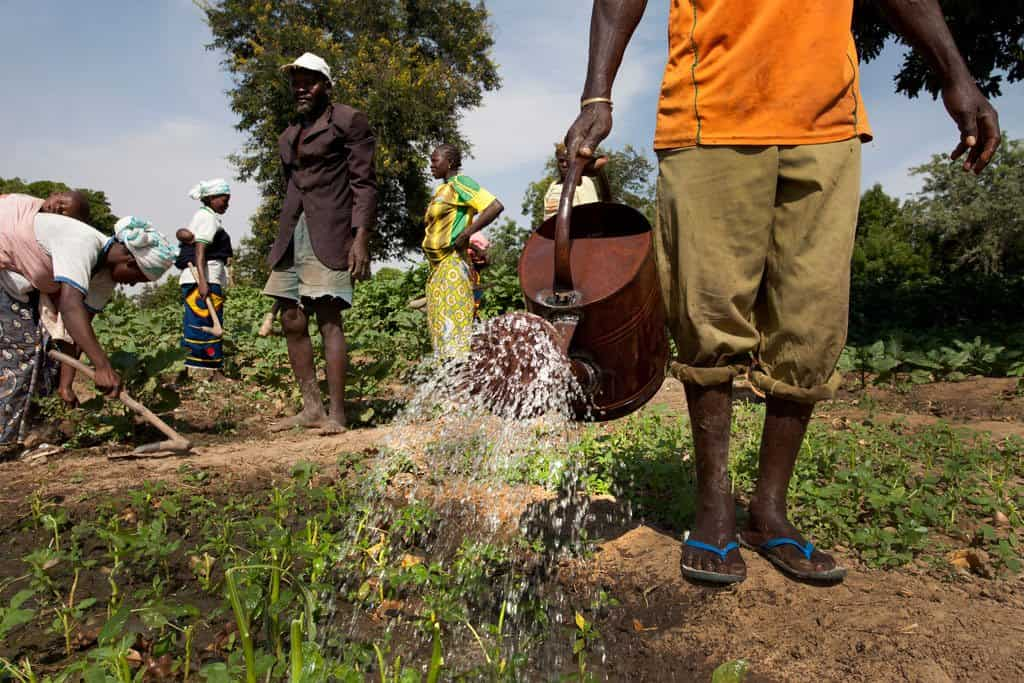
Uganda’s cooperative sector has emerged as a transformative engine of rural economic development, lifting millions from poverty through structured collective action. The sector comprises approximately 46,000 registered cooperatives with 5.6 million members as of 2025, contributing 2.68% of national GDP while employing 16% of Uganda’s population. SACCOs alone—focusing on savings and credit—experienced explosive growth from 5,798 institutions in 2015 to 31,832 by 2025, a 449% expansion that demonstrates the accelerating recognition of cooperative models. Agricultural cooperatives have similarly doubled over the past decade, enabling smallholder farmers to achieve 30% income premiums through collective marketing, access certified processing infrastructure, and transition from subsistence to commercial production. Beyond income generation, cooperatives address fundamental economic constraints facing Uganda’s 90% unbanked rural population by providing affordable credit, knowledge transfer, market aggregation, and pathways for women and youth economic participation.
The Cooperative Sector in Uganda: Scale, Growth, and Current State
Uganda’s cooperative movement represents one of Africa’s most vibrant cooperative ecosystems, rooted in both colonial-era legacy and post-2000 revival efforts. As of February 2020, Uganda had registered 21,346 cooperative societies encompassing diverse institutional forms serving distinct market segments and member needs. By March 2025, the sector expanded dramatically to approximately 46,000 registered cooperatives across all economic sectors. This growth reflects government policy shifts—particularly the 2019 National Cooperative Policy and recent July 2025 governance reforms—that explicitly positioned cooperatives as catalytic development institutions capable of driving agricultural transformation, financial inclusion, and poverty reduction.
The sector’s composition reveals strategic specialization addressing Uganda’s most pressing economic challenges. Savings and Credit Cooperatives (SACCOs) and Agricultural Marketing Cooperatives together comprise approximately 90% of all registered institutions, with SACCOs growing from 5,798 in 2015 to 31,832 by March 2025. This 449% expansion reflects accelerating rural awareness of the critical gap between formal banking exclusion—affecting 89% of Uganda’s population—and the need for accessible financial services. Complementing this financial infrastructure are 9,567 agricultural marketing cooperatives, 1,006 multipurpose organizations, and smaller specialized institutions serving dairy (332), transport (417), fishing (88), and energy (26) sectors.
The membership base expanded proportionally with institutional growth, reaching 5.6 million people as of February 2020 and likely exceeding 8 million by 2025 given the SACCO growth trajectory. Notably, 77% of registered members were male and 23% female as of 2020, though women were disproportionately selected for leadership roles, reflecting recognition of their greater trustworthiness with member assets. This gender composition reflects both historical biases in cooperative adoption and intentional organizational dynamics where minority female participation receives leadership opportunity prioritization.
Market Access Solutions: Transforming Price Discovery and Buyer Power
The foundational mechanism through which cooperatives drive rural economic growth centers on solving the market access problem that has long constrained Uganda’s smallholder farmers. Individual farmers operating in isolation face severe structural disadvantages: fragmented production preventing access to bulk buyers, limited market information enabling middleman exploitation, poor infrastructure increasing transaction costs, and individual negotiating weakness forcing acceptance of exploitative prices. Agricultural cooperatives directly address each constraint through collective action.
Aggregation and bulk trading represent the primary value mechanism. The Maize and Cereal Cooperative Enterprise (MACE) in Isingiro District exemplifies this transformation: after capacity building support, the cooperative now produces approximately 250 tons of maize flour monthly, serving 9,000 members and achieving a four-fold yield increase (from 1 to 4 tons per acre). This aggregation enables direct relationships with formal institutional buyers—schools, supermarkets, wholesalers—otherwise inaccessible to individual producers marketing a few bags of grain. The Kyendagara Area Cooperative Enterprise (KACE) similarly doubled membership from 1,200 to 2,750 between 2023 and 2024, processing maize volume expansion from 87 to 384 tonnes annually and generating $168,563 in revenue through bulk supply contracts with institutional buyers.
Price improvements materialize through multiple channels. Coffee cooperatives participating in the BECUP (Bean to Cup) project achieve prices of 2,200-2,500 Uganda shillings per kilogram compared to 1,500-1,800 shillings from non-cooperative channels—representing a 30% to 67% premium. Organic agricultural movement (NOGAMU) data indicates broader pricing improvements of 30% to 100% across diverse commodities when farmers organize collectively. These premiums reflect both reduced intermediation markups and access to certified, higher-value market channels. Dairy cooperatives similarly achieve stable, negotiated farm-gate prices substantially exceeding informal market rates through contractual agreements with processors and formal wholesalers.
Information asymmetry reduction amplifies cooperative advantages. Cooperative membership provides systematic market information regarding buyer availability, price trends, quality standards, and contracting opportunities previously unavailable to isolated farmers. This information access enables farmers to reject exploitative offers with confidence that alternative channels exist. Market information platforms developed by cooperatives further institutionalize this advantage, creating systematic transparency around pricing and buyer requirements.
Financial Inclusion and Credit Access: Extending Banking Services to the Unbanked
Uganda’s formal financial sector reaches only 11% of the population, leaving approximately 39 million people dependent on informal mechanisms or complete financial exclusion. Savings and Credit Cooperatives (SACCOs) address this chasm through democratic, member-owned financial institutions designed specifically for rural and informal economy participants excluded from commercial banking due to lack of collateral, credit history, or geographical proximity to bank branches.
SACCOs provide diverse financial products adapted to member circumstances. Agricultural loans—the primary product for rural members—typically carry 10-15% per annum interest on reducing balance, substantially below the 20-30% charged by commercial lenders or microfinance institutions. Loan sizes range from 5 million to 500 million Uganda shillings with terms of 6 months to 4 years, calibrated to agricultural production cycles and household cash flow patterns. Beyond agricultural finance, SACCOs offer school fee loans, emergency credit, youth agronomy loans, and household consumption smoothing—addressing the full spectrum of member financial needs across lifecycle and seasonal dimensions.
The Nyabyumba Farmers’ Cooperative Society in Kabale District demonstrates this transformative scale. Operating since 2004 but nearly collapsed to 16 members by 2010 due to governance failures, strategic capacity building through the BRIGHT project catalyzed expansion to 2,958 members by December 2023, with credit extension totaling 1.18 billion Uganda shillings (approximately $474,000). This single cooperative extended more credit to rural farmers in one region than likely flowed through formal banking channels across the same geography.
A critical innovation enabling credit expansion involved solving the collateral constraint facing rural poor: most lack land titles or assets qualifying as commercial bank collateral. The “tripartite system” links Rural Producer Organizations (RPOs/farmers), Area Cooperative Enterprises (ACEs/marketing organizations), and SACCOs. This structure converts agricultural production into bankable collateral through a micro-warehouse receipt system: farmers use future harvest proceeds as loan collateral, with ACEs aggregating produce and ensuring loan repayment from buyer proceeds. This innovation fundamentally solves the collateral scarcity constraining rural credit access, extending formal credit to previously impossible-to-serve populations.
The scale of SACCO financial impact extends beyond individual transactions to systemic economic formalization. With approximately 39 million people accessing credit through SACCOs—exceeding formal banking’s reach by multiples—cooperatives function as the primary financial infrastructure through which rural Uganda integrates into formal economy transactions. Member activities span trade (51.9%), agriculture/forestry/fishing (19.6%), manufacturing (6.5%), transport and storage (5.3%), mining and quarrying (5%), and services, demonstrating that cooperatives serve as universal financial platforms rather than sector-specific organizations.
Productivity Enhancement and Knowledge Transfer: Extension at Scale
Cooperatives function as critical platforms for agricultural extension, training, and collective input procurement, addressing Uganda’s chronic extension service deficit. The Ministry of Agriculture cannot provide extension to smallholders at requisite intensity; cooperatives fill this gap through farmer-to-farmer knowledge transfer, structured training programs, and demonstration farms.
The Mt Rwenzori Snows Youth Coffee Farmers’ Cooperative Society (1,576 registered members) exemplifies modern cooperative innovation in knowledge systems. The cooperative adopted the Community Pass Digital Platform using biometric cards for record-keeping, enhancing transparency and operational efficiency. More substantively, the cooperative operates demonstration farms and conducts financial literacy training across more than 60 villages in Kabale District and branches throughout the region, creating cascading knowledge distribution systems where trained lead farmers educate peers, multiplying extension reach far beyond traditional government extension mechanisms.
Productivity gains from knowledge transfer materialize across crop systems. Rice farmers participating in ZAABTA cooperative training programs improved yields from 14-16 bags per acre to 20 bags per acre when implementing best agricultural practices—a 33% improvement. This yield expansion enables farmers to invest in productive assets, construct permanent housing, fund children’s education, and transition from consumption-focused to investment-focused household economics. Over 5,022 farmers received direct ZAABTA support across six districts, with knowledge spillover effects extending to untrained farmers in beneficiary communities.
Coffee farmer training through the Rubanga Cooperative generated export quality improvements visible in 2023-2024 statistics: coffee exports increased from 1,200 metric tons at 90% quality compliance in 2023 to 1,600 metric tons at 94% quality in 2024. This quality improvement—achieved through enhanced agronomic knowledge and post-harvest handling practices—directly enables premium pricing and improved farmer income even at constant export volumes.
Structured cooperative input procurement amplifies knowledge impacts. Rather than individual farmers purchasing chemical inputs from retailers at retail markups, cooperatives purchase agrochemicals, seeds, and tools in bulk at substantially reduced cost, passing savings to members while guaranteeing input quality through cooperative standards. This collective procurement reduces per-unit input costs while ensuring input appropriateness through extension-informed recommendations.
Value Addition and Market Diversification: Capturing Greater Value Chains
Processing infrastructure represents transformative cooperative investment enabling transition from primary commodity production to higher-margin processed products. Individual farmers marketing raw maize earn prices reflecting commodity market rates; cooperatives investing in milling infrastructure market certified maize flour at substantially higher per-unit values.
The KACE (Kyendagara Area Cooperative Enterprise) illustrates this transition. With support for agro-processing and Q-Mark certification from the Uganda National Bureau of Standards, KACE gained access to formal markets including schools, supermarkets, and cross-border trade with DR Congo and Burundi. In 2024, the cooperative processed 384 tonnes of maize into certified flour, selling at $0.44 per kilogram and generating $168,563 in revenue—substantially higher per-unit returns than raw maize sales. Contracting opportunities, including a $16,461 agreement with Persher Agro Ltd, provided stability and price predictability, creating farmer incentives to increase production and reinvest in farm improvements.
Value addition creates employment beyond production. Processing operations generate jobs in milling, warehouse management, quality control, packaging, and administration—employment opportunities for women and youth historically excluded from agricultural commodity trading. MACE’s processing facility and KACE’s expansion employed previously unemployed community members, creating local multiplier effects as new wage earners purchase goods and services from local merchants.
Product diversification enabled through cooperative processing reduces farmer vulnerability to price volatility affecting individual commodities. Multi-product cooperatives can direct raw materials toward whichever processed product currently commands premium pricing, managing risk through portfolio diversification impossible for individual farmers.
Women’s Economic Empowerment and Decision-Making Authority
Cooperative membership fundamentally transforms women’s economic circumstances and household decision-making authority. While women constitute the majority of rural smallholder farmers, they typically control fewer agricultural resources, land, or assets than men, limiting their capacity for independent enterprise development. Cooperative membership directly addresses these constraints through collective resource access and group decision-making authority.
Women cooperatives provide platforms for income generation through collective efforts, enabling members to engage in trading, agricultural production, handicraft manufacturing, and small-scale business activities. Pooled resources allow women to undertake larger commercial activities and access loans unavailable to individuals due to collateral constraints. This economic independence translates to enhanced household decision-making authority: women earning substantial cooperative income gain household negotiating power regarding resource allocation, children’s education, healthcare investments, and other family-level decisions.
Training and skill development within cooperative structures enhance women’s human capital. Women gain business management competencies, financial literacy, agricultural best practices, and marketing skills through cooperative training programs. This education-based empowerment creates pathways for women to operate independent enterprises, become cooperative leaders, and advocate for community-level resource allocation.
Community solidarity and social cohesion represent underestimated cooperative benefits for women. Cooperative membership provides networks of mutual support addressing common constraints, creating platforms for advocacy around gender equality, and building female leadership visibility within communities historically denying women public roles. These social dimensions directly reduce women’s isolation and enhance their psychological wellbeing alongside economic benefits.
Government and cooperative development strategies increasingly recognize women’s leadership potential and deliberately structure inclusion mechanisms. New cooperative policies encourage women and youth representation in governance elections and training accessibility, addressing historical governance concentration among older male members. Initiatives supporting women-led cooperatives provide technical assistance and financing specifically targeting female entrepreneurs.
Youth Employment and Agri-Entrepreneurship: Creating Pathways from Unemployment to Prosperity
Unemployment among Uganda’s youth—with rates exceeding 83% in Northern Uganda before cooperative interventions—represents a critical development challenge jeopardizing social stability and economic growth. Cooperatives create employment and entrepreneurship pathways through two primary mechanisms: cooperative service provision and cooperative-led business opportunities.
Agricultural service provision through youth integration into cooperatives addresses dual constraints simultaneously: rural youth lack employment opportunities while smallholder farmers require extension services. The PlantwisePlus program, implemented through cooperative platforms in Kenya and Uganda, selected and trained 87 youth from the ZAABTA Cooperative’s existing network as “Plant Doctors.” These youth received training in crop diagnostics, pest management, financial literacy, and farmer advisory provision, then became integrated service providers offering spray services, diagnostics, digital mapping, and agro-input dealership services to cooperative member farmers.
Income generation through youth service provision reached 200,000 Uganda shillings monthly (approximately $56 USD) in Northern Uganda, exceeding typical wage labor rates available in rural communities. More significantly, these positions provided pathways to business formalization: trained youth formed youth councils, received business modeling training, and launched agro-input dealerships operated independently or in partnership with cooperative enterprises. Rubanga Cooperative witnessed four youth-run agro-shops established with cooperative support, now operating independently with generated sustainable income streams.
Youth entrepreneurship within cooperatives expanded beyond service provision to independent business formation. Youth accessed cooperative loans at preferential rates to launch transport services, input dealerships, produce bulking operations, and processing enterprises. SACCO loans enabled business expansion for youth who had previously lacked access to capital. This cooperative-facilitated entrepreneurship addressed unemployment by creating self-employment opportunities aligned with local value chains.
Knowledge transfer and mentorship within youth-integrated cooperatives created spillover effects. Trained youth mentored peers, establishing informal training systems where successful agri-entrepreneurs transferred competencies to younger community members without external program costs. This peer-to-peer knowledge transfer ensured sustainability beyond external program funding, creating local capacity for continued youth employment creation.
Poverty Reduction Impact: Evidence from Household-Level Research
Empirical research on cooperative impact demonstrates significant poverty reduction effects. Community group membership—including cooperatives and savings associations—reduces the likelihood of multidimensional poverty by over 3 percentage points for rural residents, with larger effects for participants in economically active groups. This impact translates to substantial absolute poverty reduction given Uganda’s rural population of approximately 35 million people.
Qualitative research on revived cooperatives found compelling evidence of poverty alleviation: over 90% of surveyed members reported income changes after joining and marketing through cooperatives, with 92% of those reporting positive changes. Income improvements enabled measurable quality-of-life advancement: increased household meal frequency from 1-2 meals daily to 2-3 meals daily; enhanced affordability of basic household items; increased household savings; and increased production and productivity.
The relationship between cooperative participation and poverty reduction strengthens through income stability and risk mitigation. Cooperative membership smooths household income through credit access enabling consumption protection during agricultural off-seasons and household emergencies. Collective marketing reduces vulnerability to monopsony (single-buyer) exploitation where individual farmers must accept whatever prices dominant traders offer. Cooperative crop insurance and emergency funds provide social protection mechanisms addressing household shocks—illness, death, or weather disasters—that typically drive poor households into deeper poverty.
Research comparing poor and non-poor households reveals important differential impacts. Cooperative participation had more pronounced poverty vulnerability reduction effects for non-poor, higher human capital, and higher-income farm households compared to poor, lower human capital households. This finding suggests that while cooperatives benefit all participant groups, the poorest face additional constraints—inadequate land holdings, limited education, weak asset bases—that limit cooperative participation capacity even when availability improves. Policy implications involve targeted poor household support through dedicated cooperative programs with enhanced credit, training, and asset-building interventions.
Government Policy Environment and Institutional Support
Uganda’s government policy framework has shifted dramatically toward cooperative sector strengthening. The 2019 National Cooperative Policy explicitly positioned cooperatives as poverty eradication, employment creation, and socio-economic transformation instruments, reversing decades of policy neglect and institutional collapse. This policy orientation materialized into concrete support mechanisms and strategic priority positioning.
National Development Plan IV (2025/26-2029/30) explicitly recognizes cooperatives as drivers of three strategic objectives: full economy monetization through financial inclusion, agricultural value chain development through value addition, and agricultural transformation toward commercial production. This planning-level integration ensures cooperative development receives investment priority and institutional coordination across government sectors.
The National Cooperative Bank initiative represents the most ambitious recent institutional innovation. After a previous Cooperative Bank collapse (1999), government proposed gradual reinstitutionalization through phased capitalization: Phase 1 targeted UGX 10 billion to establish banking regulatory capacity and governance frameworks; subsequent phases targeted UGX 150-200 billion in long-term capitalization enabling comprehensive cooperative banking services. This phased approach acknowledges that institutional readiness and governance quality must precede full commercial banking operations, learning from previous institutional failures.
Governance accountability mechanisms strengthened substantially in July 2025 when the Ministry of Trade, Industry and Cooperatives dissolved several cooperative union boards found in breach of cooperative laws and principles. This unprecedented enforcement signaled government commitment to governance standards and member protection, departing from historical laissez-faire cooperative regulation. Enhanced governance accountability builds member trust and enables improved performance across cooperative operations.
Development fund integration represents strategic policy innovation. The Parish Development Model (PDM) and Emyooga (agricultural improvement fund) represent substantial government financing streams—potentially billions of shillings—historically experiencing access and accountability challenges when delivered through informal channels. Recent policy directives call for consolidating these development funds through established cooperative institutions, simultaneously accomplishing improved resource efficiency and cooperative capitalization. This integration transforms cooperatives from standalone development organizations into central government delivery mechanisms for rural development finance.
International development partner support reinforced government efforts. The Netherlands Embassy launched four projects worth 84 million Euros in November 2024, including the Farmer Organizations for Rural Transformation (FORT) project supporting smallholder farmers through cooperatives. Global cooperative networks including the International Cooperative Alliance provided policy guidance and institutional learning, enabling Uganda to benefit from international cooperative movement experiences and best practices.
Challenges and Sustainability Constraints
Despite remarkable achievements, Uganda’s cooperative sector faces significant sustainability challenges requiring policy attention. Governance failures and poor leadership remain primary barriers preventing cooperatives from realizing their potential. Cooperatives dependent on effective democratic governance frequently deteriorated when leadership exploited member assets, concentrated decision-making authority, or failed to pursue member interests transparently. Unlike commercial enterprises where ownership and control concentrate in shareholder hands, cooperatives depend entirely on member participation, making governance quality essential but difficult to maintain across thousands of geographically dispersed organizations.
Capital insufficiency represents a second critical constraint. Many cooperatives operate with minimal working capital limiting ability to advance member payments, purchase productive equipment, or invest in processing infrastructure. The previous Cooperative Bank’s collapse eliminated cooperatives’ primary source of patient capital; subsequent dependence on commercial lending at market rates proved prohibitively expensive. The National Cooperative Bank initiative addresses this constraint if successfully capitalized and governed effectively.
Sustainability following external support withdrawal has plagued cooperatives whose establishment and initial operation depended on donor or government project funding. When project support terminated, many cooperatives deteriorated as leadership lacked capacity to operate independently and members reduced participation commitment. This sustainability challenge suggests that genuine cooperative development requires extended institutional support and gradual capacity building rather than short-term project interventions focused on rapid membership growth.
SACCO loan repayment rates remain persistently low, particularly for cooperatives lacking productive units from which borrowers can repay loans directly. The tripartite system addresses this through agricultural value chain integration, but many SACCOs operating outside production-integrated frameworks experience payment defaults and portfolio deterioration. Technical capacity for credit underwriting and portfolio management remains inadequate in many cooperatives.
Gender equality within cooperative governance remains incomplete despite women’s increasing participation. While women constitute increasing cooperative membership percentages and occupy leadership roles at higher rates than in mixed organizations, institutional mechanisms ensuring women’s voice in strategic decisions remain underdeveloped. Policy emphasis on women’s representation in governance elections represents progress, but deeper challenges regarding organizational cultures valuing women’s perspectives require continued attention.
Conclusion
Cooperatives have emerged as institutional mechanisms through which Uganda’s rural millions access markets previously beyond reach, secure credit excluded from formal banking, increase productivity through knowledge transfer, and achieve income improvements enabling investment in household wellbeing. The sector’s explosive growth—from approximately 10,000 registered cooperatives in 2011 to 46,000 by 2025, with SACCO expansion from 5,798 to 31,832 in a single decade—reflects deep rural recognition of cooperatives’ transformative potential.
The evidence demonstrates multiple pathways through which cooperatives drive rural economic growth: aggregation solving market access constraints; financial inclusion serving the 89% excluded from formal banking; productivity enhancement through extension and training; value addition enabling market diversification; and social empowerment particularly for women and youth. These mechanisms operate not in isolation but synergistically, creating reinforcing systems where cooperative marketing enables input investment, production increases, processing infrastructure investment, and further income gains.
Government policy environment transformation represents necessary institutional support, positioning cooperatives as strategic development instruments within national development plans, committing to governance accountability, and establishing the National Cooperative Bank toward long-term capitalization. International development partner support reinforced government efforts, providing technical expertise and financing complementing domestic capacity.
Yet translating policy ambition into ground-level impact requires sustained implementation commitment, adequate capitalization, governance excellence, and deliberate member benefit delivery. The sector faces governance challenges, capital constraints, and sustainability questions requiring continued policy attention. With deliberate action addressing these constraints, Uganda’s cooperatives remain positioned as institutional backbones through which millions of rural residents access finance, build enterprises, create employment, and achieve prosperity within the next decade.