
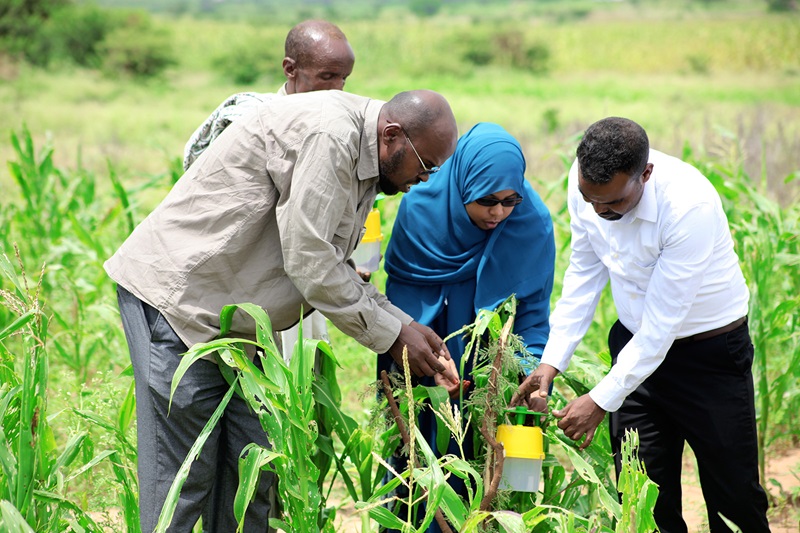
Cooperatives have emerged as transformative engines of rural economic development in Uganda, fundamentally reshaping agricultural productivity, income generation, and poverty alleviation across the country’s diverse regions. Uganda’s cooperative sector has experienced explosive growth—from 4,504 agricultural cooperatives in August 2012 to over 20,000 registered cooperatives nationwide as of 2025—reflecting increasing recognition among rural farmers of collective action’s economic value.
The empirical evidence demonstrates substantial economic impact: cooperative members achieve approximately 30% higher incomes compared to non-cooperative farmers through improved market access and economies of scale; productivity gains reach 4X increases (from 1 ton/acre to 4 tons/acre for maize) when farmers access certified inputs and training through cooperatives; and youth earning through cooperative service provision average 200,000 Uganda shillings monthly (approximately $56 USD), enabling access to credit and business expansion opportunities previously unavailable.
This report synthesizes Uganda-specific research, case studies, and policy frameworks demonstrating how cooperatives address critical rural development challenges—market access barriers, input supply gaps, credit constraints, employment scarcity, and technology adoption—while creating pathways for sustainable livelihood improvement for hundreds of thousands of rural Ugandans. The analysis encompasses cooperative scale, economic contributions, member income impacts, employment creation, and strategic policy recommendations for accelerating cooperative-led rural transformation.
1. The Scale and Institutional Landscape of Uganda’s Cooperative Sector
Growth and Expansion
Uganda’s cooperative sector has experienced remarkable institutional expansion over the past two decades. Registration data demonstrates this trajectory: from 4,504 agricultural marketing cooperatives in August 2012, the sector expanded to over 9,000 agricultural cooperatives by January 2020—more than doubling in less than a decade. By 2025, total registered cooperatives across all sectors exceeded 20,000, encompassing diverse organizational types serving distinct rural constituencies.
This expansion reflects farmer recognition of collective action’s superior economic outcomes compared to individual farming. Rural communities increasingly form new cooperatives, and existing cooperatives expand membership, suggesting sustained belief in cooperative value propositions.
Cooperative Diversity and Sectoral Coverage
Uganda’s cooperative sector spans multiple organizational types and sectors:
Savings and Credit Cooperatives (SACCOs): Comprising the largest membership segment, SACCOs aggregate rural savings and provide affordable credit to members. These organizations address critical credit constraints limiting agricultural investment and business expansion.
Agricultural Marketing Cooperatives: Focused on aggregating, processing, and marketing agricultural products. Marketing cooperatives solve the perennial small-farmer problem—production volumes insufficient for economical direct market access—through aggregation enabling buyer negotiations and commodity sales.
Multipurpose Cooperatives: Offering integrated services including input supply, credit, marketing, and sometimes processing. Multipurpose structures maximize member benefit by addressing multiple constraints simultaneously.
Specialized Cooperatives: Focused on specific subsectors (dairy, fishing, transport services, coffee production). Specialization enables deep expertise and sector-specific service delivery.
Health Cooperatives: Emerging innovation where members pool health insurance premiums enabling cooperative negotiation with local healthcare providers for affordable services.
2. Resolving Market Access Barriers: The Fundamental Cooperative Value Proposition
The Market Access Problem
Individual smallholder farmers throughout rural Uganda face severe market access barriers: scattered production insufficient for economical commodity shipment, poor rural road infrastructure limiting buyer accessibility, lack of market information enabling spot price discovery exploitation by middlemen, inability to negotiate competitive prices, and vulnerability to speculative buying during harvest gluts.
These barriers confine farmers to survival-level income despite agricultural productivity. A farmer producing one ton per acre at commodity prices realizes minimal income; investment in productivity improvements generates insufficient financial return to justify the effort.
How Cooperatives Solve Market Access Constraints
Cooperatives resolve market access barriers through institutional mechanisms unavailable to individual farmers:
Aggregation Scale: A cooperative of 500-1,000 farmers consolidates individual production into hundreds or thousands of metric tons—sufficient volume for direct buyer access, economical processing, and attractive for large buyers (processors, retailers, exporters) seeking reliable supply.
Buyer Relationship Development: Rather than hundreds of individual farmers seeking buyers independently, cooperative representatives establish professional buyer relationships, negotiate contracts, and manage consistent supply. This professionalization enables cooperatives to command premium pricing and stable markets individual farmers cannot access.
Collective Marketing: Cooperatives can offer packaged branded products (certified, processed, graded) that individual farmers cannot create independently. Commodity branding commands price premiums versus unpackaged commodities.
Market Information Integration: Cooperatives access market intelligence—price trends, buyer preferences, emerging demand—that individual farmers cannot research independently. This information enables production planning matching actual demand.
Empirical Market Access Impact
Uganda’s cooperative case studies demonstrate market access transformation:
MACE (Maize and Cereal Cooperative Enterprise) in Isingiro District exemplifies this impact. MACE evolved from struggling individual farmer groups into a regional maize miller and supplier processing 250 tons of maize flour monthly, serving 9,000 members. Through certified processing and formal market access, MACE members increased yields from one ton per acre to four tons per acre—a 4X improvement—with corresponding income multiplication. Members transitioned from subsistence farming to cash income enabling education investment and permanent housing construction.
Kyendagara Area Cooperative Enterprise (KACE) in Kitagwenda District demonstrates rapid processing expansion. KACE processed 87 tons of maize in 2023; by 2024, expanded to 384 tons—4.4X increase—generating USD 168,563 in revenue through certified maize flour sales at USD 0.44/kg (premium versus commodity pricing). Contract opportunities with buyers like Persher Agro Ltd provided price predictability and growth incentives.
3. Agricultural Productivity Transformation
Input Access and Technical Guidance
Cooperatives dramatically improve agricultural productivity through two mechanisms: ensuring farmer access to quality certified inputs (seeds, fertilizers, tools) and providing technical training on best practices.
Individual smallholder farmers typically lack access to certified improved seeds and quality fertilizers. Rural input markets remain underdeveloped; shops in remote areas stock only low-quality inputs at inflated prices. Cooperatives achieve 40-50% input cost reductions through bulk purchasing, passing savings to members.
More importantly, cooperatives pair input availability with technical training. Demonstration farms operated by cooperatives, farmer field schools, and training programs ensure members understand how to apply improved practices. Many farmers lack knowledge that productivity gains require not just inputs, but specific application techniques.
Documented Productivity Gains
Research and case studies document substantial productivity improvements:
Maize Production: MACE members achieved 4X yield increases (1 ton to 4 tons per acre) through certified input access and training. KACE members similarly demonstrate dramatic yield improvements enabling increased production volume and income.
Rice Production: Youth-led ZAABTA cooperative program improved rice yields from 14-16 bags per acre to 20 bags per acre when farmers implemented best practices through cooperative training. Over 5,022 farmers received training across six districts.
Potato Seed Production: Nyabyumba Farmers’ Cooperative member Charles Byarugaba, receiving cooperative support for screen house investment (cooperative contributed 115 million shillings, Byarugaba 30 million), achieved recognition as runner-up in national Farmer Awards with 30 million-shilling prize—demonstrating market validation of improved production practices.
Coffee Production: Farmers in BECUP project (Bean to Cup partnership between We Effect and Long Miles Coffee) achieve superior prices: 2,200-2,500 Uganda shillings per kilogram compared to 1,500-1,800 from other buyers—a 30-40% premium.
Productivity Impact on Food Security
Productivity improvements translate directly to improved household food security. Higher yields enable farmers to maintain family consumption while generating marketable surplus. Cooperatives often include food security objectives explicitly, prioritizing staple crops alongside income-generating crops.
4. Member Income Transformation and Poverty Reduction
Income Multiplier Effects
Cooperative membership correlates with measurable income improvements. Research on maize cooperatives in Rwanda—findings generalizable to Uganda’s context—identified approximately 30% income increases per farm compared to non-cooperative farmers, primarily from better economies of scale, longer establishment periods, and increased government support.
This 30% income improvement represents significant household-level economic transformation, particularly for poorest rural households. A family household income of $300 annually increasing to $390 enables education investment, healthcare access, and improved housing—investments foundational for intergenerational poverty reduction.
Coffee Cooperative Income Example
Coffee cooperative members in BECUP project demonstrate income transformation. Members earn approximately 1.5 million Uganda shillings per season during good production years—sufficient to purchase land at market centers and build rental properties. This income trajectory represents transition from subsistence farming toward asset accumulation and wealth building.
Multidimensional Poverty Reduction
Cooperative membership extends beyond income improvement to multidimensional poverty reduction. Research on Uganda National Household Surveys (2016/2017, 2019/2020) demonstrates that participation in community groups (including cooperatives and SACCOs) enables rural residents to access vital livelihood resources—financial capital through savings/credit, social capital through group participation, natural capital through collective land management, and human capital through training access.
Analysis indicates that households participating in community groups experience significantly lower multidimensional poverty compared to non-participants. Poverty reduction operates through multiple mechanisms: immediate income effect from improved earnings, human capital effect from training/education access, social protection effect from group mutual support during hardship, and asset accumulation enabling future income generation.
5. Employment Creation and Youth Livelihood Opportunities
Youth Unemployment Challenge
Rural Uganda faces severe youth unemployment. Young people transitioning from school to work encounter 83% unemployment rates in many rural areas, with few employment opportunities outside agriculture. Lack of income generates desperation, drives migration to urban areas, and reduces rural human capital.
Cooperative Service Provider Model
Cooperatives create youth employment through a service provider model: trained young people provide agricultural services (input application, farm monitoring, pest management, produce aggregation) to smallholder farmers and cooperatives. This model creates simultaneous benefits: young people earn income; farmers access affordable services previously unavailable; cooperatives expand service coverage; and agricultural productivity improves.
Youth Income and Business Development
Kenya Experience: Youths in Kenya earn approximately KES 15,000 per month (approximately $115 USD) from cooperative service provision.
Uganda Experience: Ugandan youths earn an average of UGX 200,000 per month (approximately $56 USD) through cooperative service work. While lower than Kenya, this income provides young people with financial independence and enables access to SACCO loans for business expansion.
This income represents transformational opportunity for rural youth previously without employment options. Young people earning UGX 200,000 monthly accumulate capital enabling business investment, and cooperative SACCO membership provides credit enabling larger business scale-up than individual savings alone.
Agro-Shop and Microenterprise Development
Youth earning cooperative income often transition to independent entrepreneurship. Rubanga cooperative witnessed four youth-run agro-shops started with cooperative support now being independently managed. ZAABTA youth similarly operate agro-input shops, earning both salaries and commissions.
This entrepreneurship progression—from wage employment to independent business ownership—represents pathway from unemployment to job creation, leveraging cooperative platform for initial employment and business development support.
6. Women’s Empowerment and Gender Equality
Cooperative Participation and Women’s Agency
Women historically excluded from rural economic participation have found pathways to economic empowerment and decision-making authority through cooperatives. Rukundo International’s Women’s Agricultural Cooperative in Kabale District trains women in backyard gardening, goat rearing, financial literacy, and small business development, providing dignified income pathways.
The cooperative model emphasizing democratic governance creates space for women’s participation in leadership. While barriers persist, women increasingly hold cooperative governance positions (board members, committee roles), enabling direct participation in organizational decision-making.
Income and Autonomy
Women accessing income through cooperative participation achieve economic independence and household negotiating power. Studies document that women controlling income increase household spending on children’s education and healthcare—investments generating long-term poverty reduction benefits.
Goat Ownership and Sustainable Livelihoods
Women’s cooperatives innovate livelihood models addressing multiple constraints simultaneously. Goat ownership programs exemplify this integration: goat manure fertilizes women’s gardens, improving productivity; goats reproduce quickly, enabling herd expansion; income generation occurs with minimal input investment. This integrated approach provides sustainable livelihood generation addressing multiple dimensions of rural poverty.
7. Financial Deepening and Credit Access
The Credit Access Problem
Rural Uganda faces severe credit constraints limiting productive investment. Smallholder farmers and rural entrepreneurs lack collateral for commercial bank loans; commercial lending rates (20-30% annually) exceed rural borrowers’ productive investment returns. Government has recognized this constraint, implementing input subsidy programs attempting to improve access without addressing underlying credit scarcity.
Cooperative Credit Solutions
SACCOs mobilize member savings into credit sources providing affordable, appropriately-structured lending to rural borrowers. A SACCO of 500-1,000 members aggregates substantial savings—potentially millions of Uganda shillings—creating credit capital available for member lending.
Nyabyumba Cooperative Example: The cooperative extended 1.18 billion Uganda shillings in credit to members as of December 2023, providing agricultural loans, school fee loans, youth agronomy development loans, and emergency loans. This substantial credit volume enables productive investment that individual members could not finance through personal savings alone.
Interest Rate Advantage: Cooperative lending rates typically range 10-15% annually, substantially below commercial rates, enabling productive investments with positive returns. A farmer borrowing at 12% for improved seeds, fertilizers, and tools at 15-20% productive return generates positive investment margin, versus commercial rates (20-30%) reducing feasibility of productive borrowing.
Credit-Productivity-Income Virtuous Cycle
Affordable credit enables farmer investment in productivity-enhancing inputs and practices, increasing yields and income. Improved income enables savings accumulation, increasing cooperative capital base and credit availability for subsequent investment. This virtuous cycle progressively increases farmer income and reduces poverty.
8. Processing and Value Addition
Cooperative Processing Investment
Beyond basic marketing, high-performing cooperatives invest in post-harvest processing infrastructure—mills, dryers, packaging equipment, storage facilities—enabling value addition and branded product development. Processing investments require substantial capital, often exceeding individual farmer capacity.
Cooperatives mobilize member capital, government support, and development partner funding to establish processing operations. While infrastructure investments entail risk, successful cooperatives generate returns justifying investment.
Income Multiplication Through Processing
Processing dramatically multiplies income compared to raw commodity sales. MACE’s maize processing operation processes raw maize into maize flour, capturing milling margins and enabling premium branded sales. Muyenga Dairy Cooperative’s milk collection and processing activities capture value-addition margins between raw milk prices and processed dairy product values.
Me Village cooperative’s organic tea processing—converting raw tea leaves into premium tea bags and instant tea—achieves 3-4X pricing compared to raw commodity sales. This margin multiplication transforms member income and cooperative profitability.
9. Institutional Development and Governance Challenges
Capacity Constraints and Governance Issues
Despite economic contributions, many cooperatives face institutional challenges limiting effectiveness. Poor member participation, inadequate governance, weak financial management, and limited staff capacity constrain cooperative development. When cooperatives fail to serve member interests effectively, membership participation declines, creating a “death spiral” where declining participation reduces revenues, deteriorating services further discourage participation.
Weak savings mobilization emerges as a significant barrier—research identifies weak savings mobilization as 2X likely to deter cooperative growth. Without member savings deposits, credit availability remains constrained, limiting cooperative services and member economic opportunity.
Governance Capacity Building Need
Cooperatives require investment in leadership training, financial management systems, transparency mechanisms, and accountability structures. Board members and staff need training on cooperative governance principles, financial management, and member service delivery. Governance capacity building represents essential foundation for sustainable cooperative development.
10. Policy Framework and Government Support
National Cooperative Policy Framework
Uganda’s government recognizes cooperative potential for poverty reduction and rural development. The National Cooperative Policy explicitly targets cooperatives as mechanisms for “poverty eradication, employment creation, and socio-economic transformation of the country”.
The policy framework emphasizes: improving cooperative governance, enhancing production capacity, supporting value addition, expanding marketing reach, deepening financial services, providing technical support, and creating enabling regulation.
DGRV and International Support
International organizations like DGRV (German Cooperative Development Association) support Uganda’s cooperative sector through medium- to long-term structural improvements, capacity building, and organizational development. DGRV interventions focus on policy and regulation, sector structures, select cooperatives, and federation development across finance, agriculture, renewable energy, and health sectors.
Alignment with National Development Plans
Cooperative support receives explicit priority in Uganda’s National Development Plan III (2020/21-2024/25), recognizing the sector’s role in achieving broader national development objectives.
11. Strategic Recommendations for Accelerating Cooperative-Led Rural Development
Strengthening Governance and Capacity
Priority Actions:
- Invest in board member and staff training on cooperative governance, financial management, and member service delivery
- Establish cooperative governance standards and accountability mechanisms
- Support creation of internal control systems and audit functions
- Build transparency mechanisms enabling member oversight
Expanding Capital Access
Priority Actions:
- Establish dedicated cooperative financial institutions or substantially increase microcredit availability
- Government credit guarantee programs reducing commercial lender risk for cooperative lending
- Development finance institution lending specifically targeting cooperative infrastructure investment
- Member capital mobilization through savings incentive programs
Supporting Value Addition
Priority Actions:
- Provide technical and financial support for cooperative-level processing infrastructure
- Link cooperatives with commercial buyers for processed products
- Support cooperative branding and product certification
- Enable market linkages for manufactured goods
Enhancing Digital Capacity
Priority Actions:
- Provide digital literacy training for cooperative staff and members
- Scale digital platforms for record-keeping, market information, and financial management
- Enable mobile banking integration for cooperative payment systems
- Support data-driven decision-making through analytics platforms
Prioritizing Youth and Women’s Inclusion
Priority Actions:
- Deliberately structure cooperatives to include youth as service providers and entrepreneurs
- Create women’s leadership development programs within cooperatives
- Support youth-led agricultural initiatives and cooperatives
- Ensure women’s substantive participation in cooperative governance
Market Linkage Development
Priority Actions:
- Facilitate cooperative-buyer relationships through matchmaking programs
- Support contract farming arrangements providing demand certainty
- Enable institutional procurement programs prioritizing cooperative suppliers
- Invest in rural infrastructure (roads, communications) enabling market access
Cooperatives have emerged as transformative institutional mechanisms for rural economic development in Uganda, fundamentally reshaping smallholder farmer productivity, income, and poverty status. The evidence is compelling: cooperative members achieve 30% income improvements, 4X productivity gains, and meaningful progress toward multidimensional poverty reduction compared to non-cooperative farmers.
The cooperative sector demonstrates particular power in addressing critical rural development constraints: market access barriers preventing profitable farm commodity sales; input supply gaps limiting productivity investment; credit constraints restricting productive investment; youth unemployment creating desperation and rural-urban migration; and women’s economic exclusion limiting human capital utilization.
Uganda’s cooperative sector growth—from 4,504 to 20,000+ registered cooperatives—reflects farmer recognition of collective action’s economic value. With continued government policy support, enhanced capital access, strengthened governance, and strategic investment in capacity building and digital modernization, Uganda’s cooperative movement stands positioned to catalyze broader rural transformation, poverty reduction, and sustainable agricultural development across the country’s diverse agroecological zones.
The path forward requires sustained commitment to cooperative principles and member-centric operations, combined with strategic investment in institutional capacity. When SACCOs and agricultural cooperatives fulfill their institutional mission—providing efficient, accountable, democratic economic services to rural members—they generate transformational livelihood improvements and contribute substantially to Uganda’s national development objectives of poverty reduction and broad-based economic growth.